
Understanding the Cucina Italiana
Which pasta goes with which sauce, what is in season, how to order in Italy: playful and well founded.

The right shape for every sauce.
In Italy the shape of the pasta is no accident: ridges hold ragù, ribbons carry butter and truffle, short shapes catch small pieces. Choose a pasta or a sauce.
The food lover’s calendar.
How Italian is your dining?
Cappuccino after dinner, parmesan on vongole, tipping in Rome: test your feel for the etiquette.
The menu, translated.
- Aceto Balsamico Tradizionale
- Traditional balsamic vinegar from Modena or Reggio Emilia: cooked grape must that ages for at least twelve years in a series of wooden barrels. Not to be confused with the simpler Aceto Balsamico di Modena IGP.
- Al dente
- Literally ‘to the tooth’: pasta or rice cooked until it still has a perceptible bite at the centre. Soft-cooked pasta is considered a mistake in Italy.
- Al forno
- Cooked or baked in the oven, such as lasagne al forno or a whole fish from the oven.
- Alla brace
- Grilled over wood or charcoal embers. Bistecca alla fiorentina is classically prepared this way.
- Amaro
- A bitter liqueur made from herbs, roots and barks, drunk as a digestivo after the meal. Many regions have their own recipes.
- Ammazzacaffè
- Literally ‘coffee killer’: the glass of grappa, amaro or liqueur after the espresso that chases away the taste of coffee.
- Antipasto
- The starter, literally ‘before the meal’. In the plural, antipasti, often a selection of small cold and warm plates.
- Battuto
- A finely chopped raw base mixture of onion, carrot and celery, often with lard or herbs. Sweated, it becomes the soffritto.
- Bis
- On menus, two smaller portions on one plate, such as ‘bis di primi’ with two pasta dishes to try.
- Bollito misto
- Various cuts of beef, veal and sausage such as cotechino, cooked in broth and served with salsa verde or mostarda. The dish is a classic in Piedmont and Emilia.
- Bottarga
- Salted, pressed and dried fish roe from grey mullet or tuna, above all from Sardinia and Sicily. It is grated over pasta or served in thin slices.
- Brodo
- Broth made from meat, chicken or vegetables. In Emilia the classic base for tortellini in brodo.
- Carrello
- The serving trolley at the table, for instance for cheese (‘carrello dei formaggi’), desserts or bollito misto.
- Cicchetti
- Small bites of the Venetian bacari, the traditional wine bars, such as baccalà mantecato on bread. They come with a small glass of wine, the ‘ombra’.
- Contorno
- A side dish of vegetables, salad or potatoes, ordered separately with the secondo and served on its own plate.
- Coperto
- A cover charge per person for bread, table linen and cutlery, shown separately on the bill. It is not a tip.
- Crudo
- Raw. Prosciutto crudo is air-dried raw ham, a crudo di pesce raw fish, plain or marinated.
- DOCG
- Denominazione di Origine Controllata e Garantita, the highest level of Italian wine classification, above DOC. Recognisable by the state seal around the neck of the bottle.
- Dolce
- The dessert; ‘dolce’ simply means ‘sweet’.
- DOP
- Denominazione di Origine Protetta, the EU’s protected designation of origin (PDO): production, processing and preparation take place in the defined area, as with Parmigiano Reggiano.
- Enoteca
- A wine shop or wine bar, often with a small kitchen; some are full restaurants with a large wine list.
- Fatto in casa
- Home-made. On the menu, usually for pasta, bread or desserts.
- Fritto misto
- A mixed fry: on the coast usually fish and seafood, in Piedmont a lavish selection of meat, vegetables and sweet things.
- Gremolata
- A mixture of finely chopped lemon zest, garlic and parsley, sprinkled over ossobuco at the end.
- Guanciale
- Air-dried, seasoned pork cheek, the fat base of carbonara, amatriciana and gricia. In Rome, pancetta from the belly counts only as a substitute.
- IGP
- Indicazione Geografica Protetta, the EU’s protected geographical indication (PGI): at least one stage of production takes place in the region of origin, as with Bresaola della Valtellina.
- Mantecatura
- The vigorous final beating of risotto or pasta with butter and cheese, which creates the creamy binding.
- Menù degustazione
- A tasting menu of several small courses chosen by the kitchen. In many restaurants it can be ordered only for the whole table.
- Minestra
- A soup with solid ingredients. Minestrone is its hearty vegetable version, while zuppa is traditionally served over bread.
- Mostarda
- Candied fruit in a syrup flavoured with mustard essence, for instance from Cremona or Mantua. It accompanies bollito misto and cheese.
- Osteria
- Originally a simple inn serving wine and a few dishes. Today ambitious restaurants also bear the name, such as the Osteria Francescana in Modena.
- Passito
- Wine made from partly dried grapes, usually sweet, such as Passito di Pantelleria or Recioto. It accompanies desserts and robust cheese.
- Pasta fresca
- Fresh pasta, in the north often made from wheat flour and egg, in the south from durum wheat semolina and water. Dried pasta, pasta secca, is not inferior but intended for different sauces.
- Primo
- The first course: pasta, risotto, gnocchi or soup.
- Ragù
- A slow-braised meat sauce. Ragù alla bolognese belongs with tagliatelle, while Neapolitan ragù is braised with whole pieces of meat.
- Scarpetta
- Mopping up the sauce with a piece of bread, literally ‘little shoe’. Among friends a compliment to the kitchen, in an elegant restaurant done more discreetly.
- Secondo
- The main course of meat or fish, without a side dish on the plate.
- Servizio
- A service charge. If ‘servizio incluso’ is on the bill, service has already been paid for and a tip is not necessary.
- Soffritto
- A base of onion, carrot and celery sweated in oil or butter, the foundation of many sauces and braised dishes.
- Stracotto
- Literally ‘overcooked’: beef braised for hours, often in red wine.
- Tagliata
- Grilled beef steak cut into slices, often on rocket with shaved parmesan.
- Tagliere
- A wooden board of salumi and cheese, popular with the aperitivo or as an antipasto for several people.
- Tartufo bianco
- White truffle (Tuber magnatum), famous above all from the area around Alba, in season in autumn. It is shaved raw over tajarin, risotto or a fried egg.
- Trattoria
- A usually family-run eatery with regional cooking and a relaxed atmosphere, often cheaper than a ristorante.
- Vino della casa
- House wine, usually served by the carafe. In good restaurants a reliable regional choice.
Did you know?
The first tomato sauce recipe printed in Italy comes from Antonio Latini: in ‘Lo scalco alla moderna’, published in Naples in 1692, he describes a tomato sauce ‘in the Spanish style’, intended for boiled meats, not for pasta.
Carbonara is younger than its reputation: the first known recipe appeared in 1952 in a cookbook from Chicago, and in Italy it was printed only in 1954, in the magazine ‘La Cucina Italiana’.
Baccalà alla vicentina is made not from salt cod but from stockfish. According to tradition, it was brought to Venice by the Venetian merchant Pietro Querini, who was stranded on the Lofoten island of Røst after a shipwreck in 1432.
The first patented espresso machine comes from Turin: Angelo Moriondo presented it in 1884 at the national exhibition held there. It brewed large quantities at once, however, not individual cups.
A bank in Emilia accepts cheese as collateral: since 1953 Credito Emiliano has stored pledged wheels of Parmigiano Reggiano in its own ageing warehouses.
The art of the Neapolitan pizzaioli has been part of UNESCO’s intangible cultural heritage since 2017. It was the craft that was honoured, not a recipe.
Italian truffle hunting is also on UNESCO’s list of intangible cultural heritage: the traditional knowledge of the truffle hunters and their dogs was added in 2021.
Fettuccine Alfredo come from Rome, from the restaurateur Alfredo Di Lelio; they became world-famous after the Hollywood stars Mary Pickford and Douglas Fairbanks discovered them in the 1920s. In Italy the principle is known simply as fettuccine al burro.
Pellegrino Artusi’s ‘La scienza in cucina e l’arte di mangiar bene’, regarded as the first cookbook of the cuisine of unified Italy, was self-published in 1891.
In 1982 the Accademia Italiana della Cucina deposited a reference recipe for ragù alla bolognese with the Bologna chamber of commerce and updated it in 2023. There it is served with tagliatelle, not with spaghetti.
From the magazine
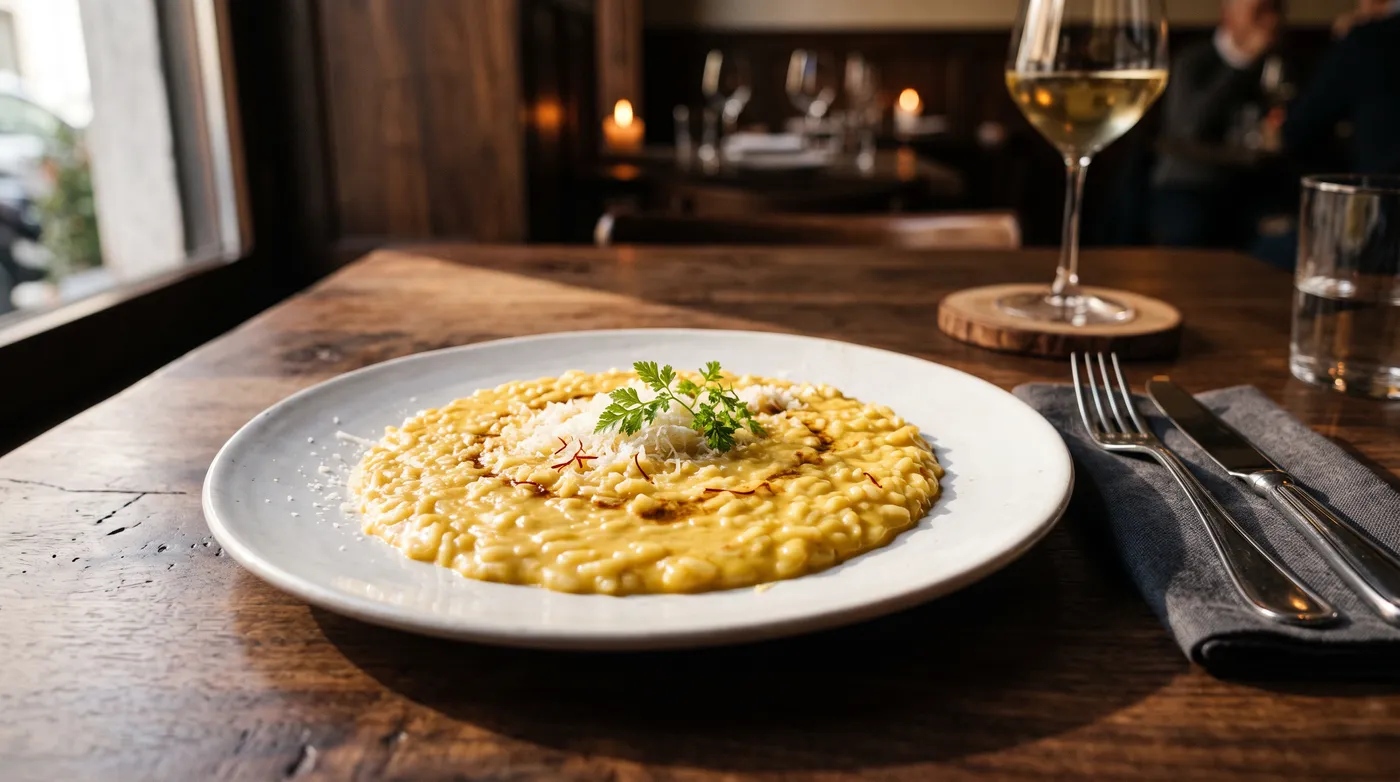
Risotto at the highest level: rice varieties, technique, mantecatura
Carnaroli, Vialone Nano or Arborio, tostatura, stock and mantecatura: how a great risotto is made and how to recognise one in a restaurant.
Pasta fresca or secca: differences, quality, regions
Durum wheat or egg dough, bronze or Teflon, dried slowly or quickly: how to recognise good pasta and why top kitchens use both.

Fine dining in Italy: etiquette from booking to bill
When people eat, what coperto and servizio mean, how much to tip and how to phrase special requests: the guide to dining in Italy.