
An order, not an obligation
Open a menu in Italy and you will almost always find it structured in a similar way: antipasti, primi, secondi, contorni, dolci. Behind this lies a sequence of courses that has grown over generations, running from the first glass before the meal to the last sip after it. It gives the evening a rhythm: start lightly, build up, wind down calmly.
For visitors from abroad one point matters: this order describes what comes in which sequence, not what you have to order. Full menus with every course are today reserved mainly for celebrations such as weddings. In everyday life Italians usually eat a primo or a secondo, sometimes both, with a side dish and a coffee. The same applies in a restaurant, although a feel for the sequence helps.
- Aperitivo: a drink and small bites before the meal
- Antipasto: usually a cold, light starter
- Primo: pasta, risotto, gnocchi, soup or polenta
- Secondo: meat or fish
- Contorno: a vegetable side dish on its own plate
- Formaggi e frutta: cheese and fruit
- Dolce: dessert
- Caffè: espresso
- Digestivo: grappa, amaro or limoncello
Aperitivo and antipasto: the opening
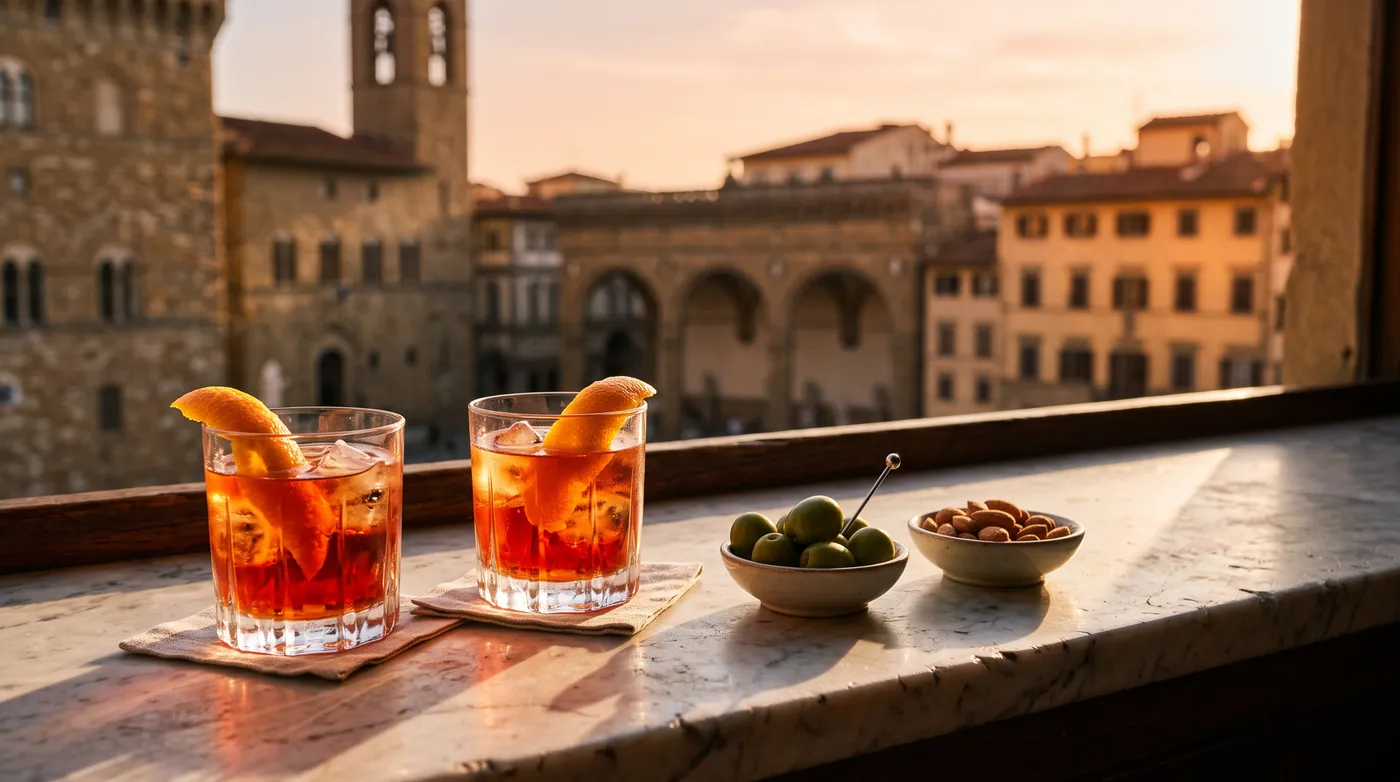
The aperitivo is meant to whet the appetite; the word goes back to the Latin aperire, ‘to open’. The drink is something dry or slightly bitter: a glass of sparkling wine, a vermouth, a bitter with soda. It comes with olives, nuts or small bites. In many upmarket restaurants a greeting from the kitchen follows at the table, which you do not need to order. In northern Italian cities the early-evening aperitivo is also a ritual in its own right in bars; before a big dinner one glass is enough, so that your appetite lasts for the courses to come.
The antipasto, the starter, is usually cold and lighter than the course that follows: cured meats such as prosciutto or culatello, marinated vegetables, carpaccio, raw fish and seafood, and in Piedmont also carne cruda, finely cut raw meat. An antipasto is easy to share. This is a tried and tested way of getting to know several of a restaurant’s dishes without filling up too early.
Primo and secondo: the two main courses
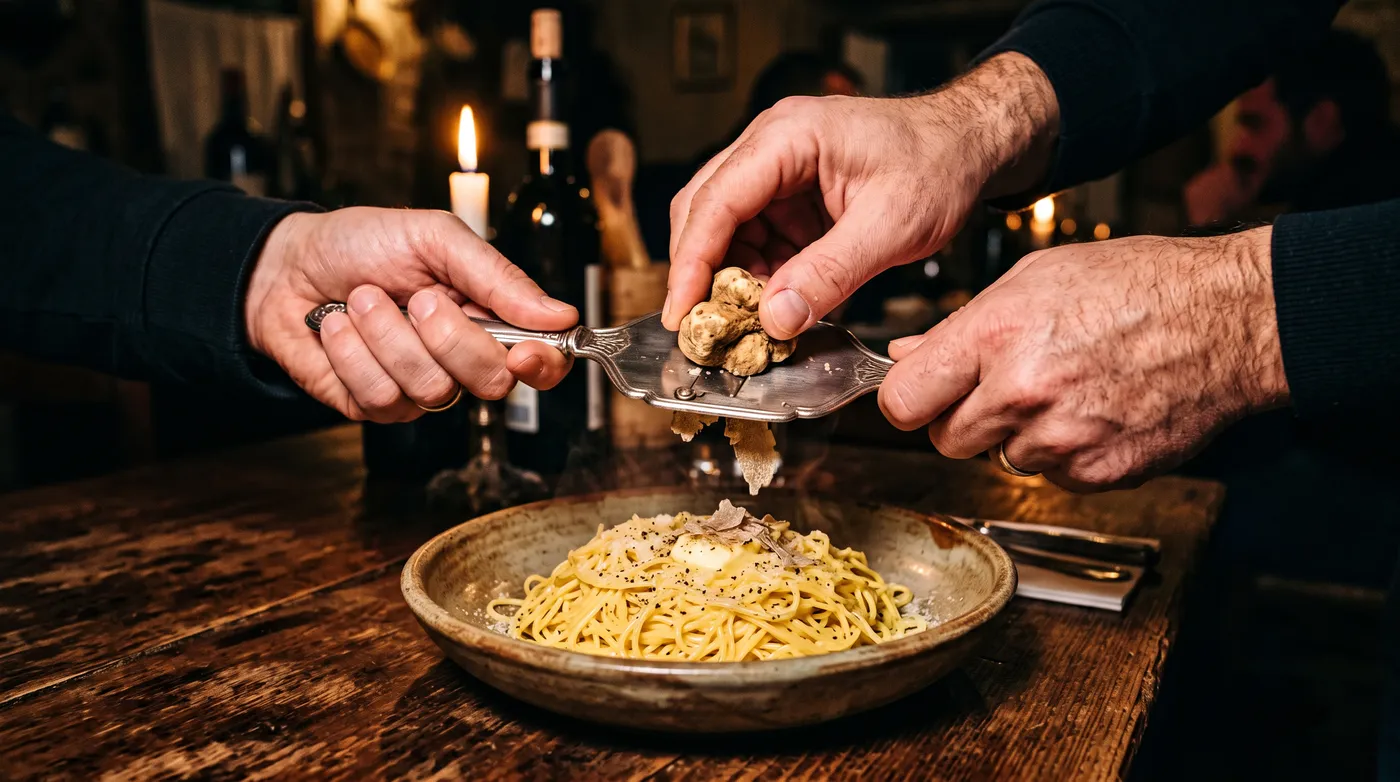
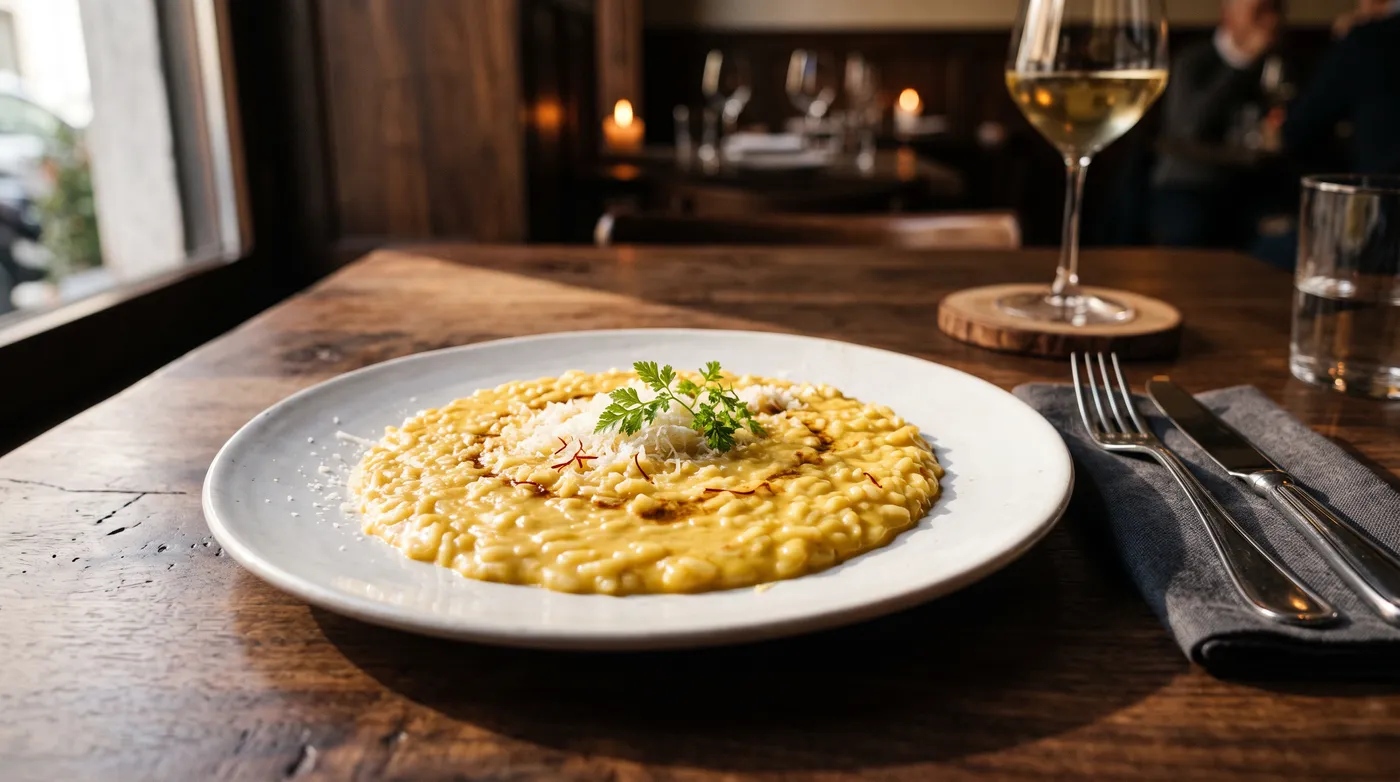
The primo, the first course, is warm and filling: pasta, risotto, gnocchi, soups or polenta. Unfamiliar to many guests from northern Europe: the primo is neither a side dish nor a starter but a course in its own right. Depending on the region it is even considered more important than the second. In Emilia-Romagna fresh egg pasta takes centre stage, in Milan the risotto.
The secondo brings meat or fish, such as a veal chop, a whole fish from the oven or a braised dish. In Italy vegetables rarely share the plate. They come as a contorno, a side dish on a separate plate, and are ordered separately: spinach, roast potatoes, grilled vegetables or a salad. If you order a secondo without a contorno, you often really do get just the meat or the fish.
Formaggi, dolce, caffè, digestivo: the finale
After the main course, traditionally minded restaurants serve a course of regional cheeses, often with fresh seasonal fruit: formaggi e frutta. Many guests skip it; with a bottle of red wine still open, however, it is a good choice. Then comes the dolce, the dessert: tiramisù, panna cotta, zabaione or a regional speciality.
Coffee is served after the dessert, not with it, and as an espresso. Milky coffee after a meal is unusual in Italy. The final note is the digestivo, a drink meant to aid digestion: grappa, an amaro (a herbal bitter) or limoncello. If it is drunk after the coffee, it is jokingly called ammazzacaffè, literally ‘coffee killer’.
How to order sensibly
In a restaurant you do not have to choose every course. Some combinations have proved themselves: they respect the sequence without being overwhelming. What matters is that the dishes come in a sensible order and that everyone at the table eats at roughly the same time.
When ordering, say what you would like to eat as a course, not just which dish. If one person has only a primo while the others choose antipasto and primo, the service can send the pasta with the others’ primi. Mention it briefly. And if you would like to share a primo, say so openly; some kitchens will then serve it on two plates.
- Antipasto and primo: light, ideal at lunchtime or before a late evening
- Primo and secondo: the classic form for guests with a good appetite
- One antipasto to share, then a primo or secondo each
- A half portion of primo before the secondo (ask whether the kitchen offers it)
- One dessert for two, then espresso and digestivo
Tasting menu or à la carte
In top restaurants there is often a tasting menu, the menu degustazione, alongside the à la carte menu. It does not strictly follow the classic order but strings together many small courses, often with a pre-dessert and piccola pasticceria, small pastries with the coffee. Many restaurants serve such menus only for the whole table, because the kitchen and the service send out the courses at the same time. If in doubt, ask when you book.
À la carte is the right choice if you want to eat a particular dish a restaurant is known for, or if the evening is to be shorter. A middle way: two courses à la carte and a shared dessert. It is best to mention intolerances and preferences when you book, because the kitchen can then plan ahead, especially for a tasting menu.
Small rules at the table
Some habits make the evening easier without anyone spelling them out. They are not rigid laws, but if you know them, you will order in a more relaxed way and understand the menu better.
- Water is ordered naturale (still) or frizzante (sparkling).
- Bread accompanies the whole meal and is not a course of its own.
- Grated cheese over fish and seafood dishes is unusual in Italy; if in doubt, ask.
- Many bills include a coperto, a cover charge for bread and table service.
- In Italy cappuccino is drunk in the morning, espresso after a meal.
- Dinner is usually eaten later than people north of the Alps are used to; if you book very early, you will often be sitting in an empty dining room.
Frequently asked questions
Do I have to order several courses in an Italian restaurant?
No. Even in Italy most people eat only a primo or a secondo in everyday life, sometimes both. All that matters is that the courses come in a sensible order.
Is pasta a starter?
No, pasta belongs to the primo, the first of two main courses. A half portion before the secondo is possible if the restaurant offers it.
What is the difference between digestivo and ammazzacaffè?
Both terms mean a drink to round off the meal, such as grappa or amaro. It is called ammazzacaffè when it is drunk after the espresso.
Why don’t the vegetables come with the meat?
In Italy the vegetable side dish, the contorno, is a dish in its own right on a separate plate. Order it to go with your secondo.